5,000 years of civilization, conquest, culture, and courage — told through 20 chapters of deeply researched history, geography, and heritage.
Years of History
Chapters
Sacred Rivers
Punjabis Worldwide
About PunjabSaga
PunjabSaga is a comprehensive digital encyclopedia of Punjab — one of the most historically significant regions on earth. From the dawn of the Indus Valley Civilization around 3500 BCE through the Vedic Age, the Mauryan and Gupta Empires, the Sikh Empire, the British colonial era, Partition, and into the modern world.
Our 20 chapters trace every era with scholarly depth, bringing together history, geography, ecology, language, people, and culture in one immersive platform.
The Panj-Āb
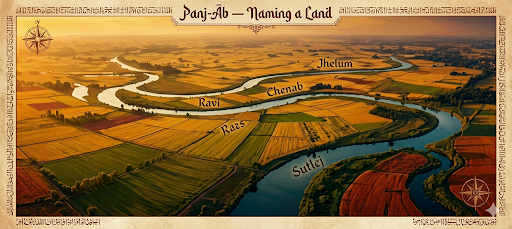
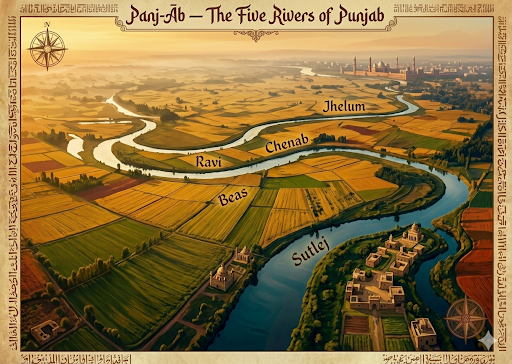
Punjab takes its name from these five rivers — Panj (five) + Āb (waters). Each river is a civilizational artery, shaping the land, its people, and its destiny.
The ancient Vitastā of the Rigveda. Alexander the Great crossed it to face King Porus at the Battle of the Hydaspes in 326 BCE.
Chhaj DoābThe mightiest of the five — the ancient Asikni. The Sufi saint Bulleh Shah composed immortal poetry on its banks.
Rechna DoābLahore was built on the Ravi's banks. The ancient Parushni witnessed the first hymns of the Rigveda.
Bāri DoābWhere Alexander's army refused to march further east. The Vipāśā marks the eastern edge of the classical Panj-Āb.
Bist DoābThe southernmost of the five and the longest. The Śatadrū forms the boundary between the Sikh heartland and the Gangetic plains.
Malwa / Bist DoābAll Chapters
Each chapter is a deep dive into a distinct era of Punjab's extraordinary story.

Chapter 01
Etymology, geographic boundaries, and the ancient identity of the land of five waters.
Read Chapter
Chapter 02
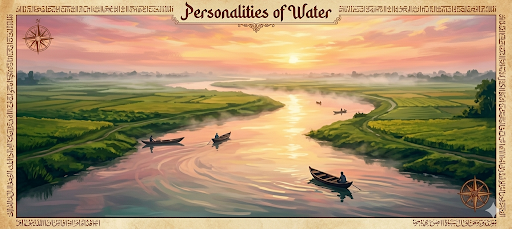
Jhelum, Chenab, Ravi, Beas, Sutlej — the five rivers as living characters that shaped Punjab's civilisation.
Read Chapter
Chapter 03
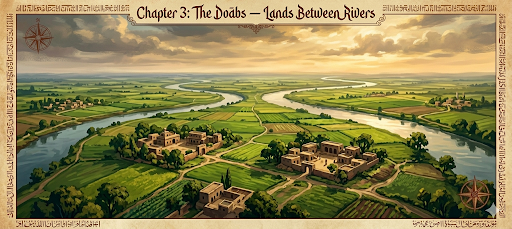
The five inter-river tracts — Jech, Rachna, Bari, Bist, Sindh-Sagar — that defined Punjab's geography.
Read Chapter
Chapter 04
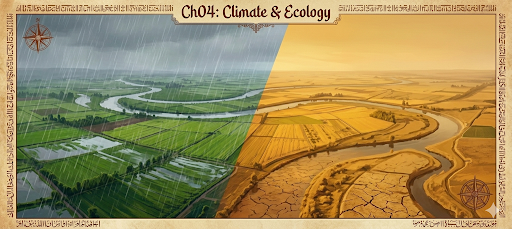
Monsoon rhythms, flood cycles, soil science, pre-canal ecology, and the forests of ancient Punjab.
Read Chapter
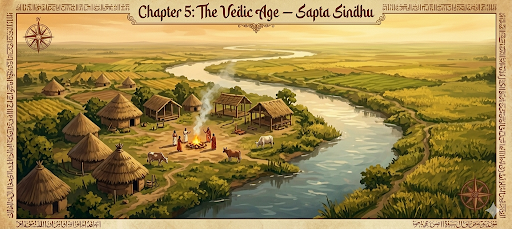
Chapter 05
Sapta Sindhu — the Land of Seven Rivers — and Punjab in the Rigvedic texts.
Read Chapter
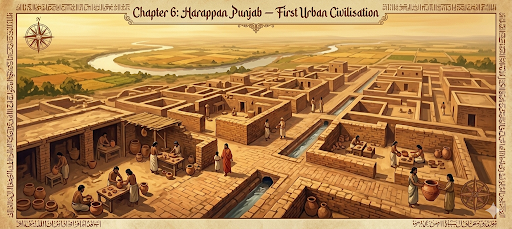
Chapter 06
Harappa, Rakhigarhi, Ropar — cities of the Indus–Ghaggar network, trade, and the geography of collapse.
Read Chapter
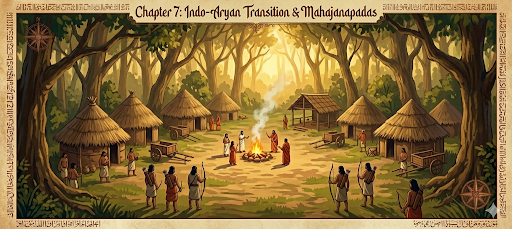
Chapter 07
The Vedic age, Aryan migrations into Punjab, and the rise of the Mahajanapada republics.
Read Chapter
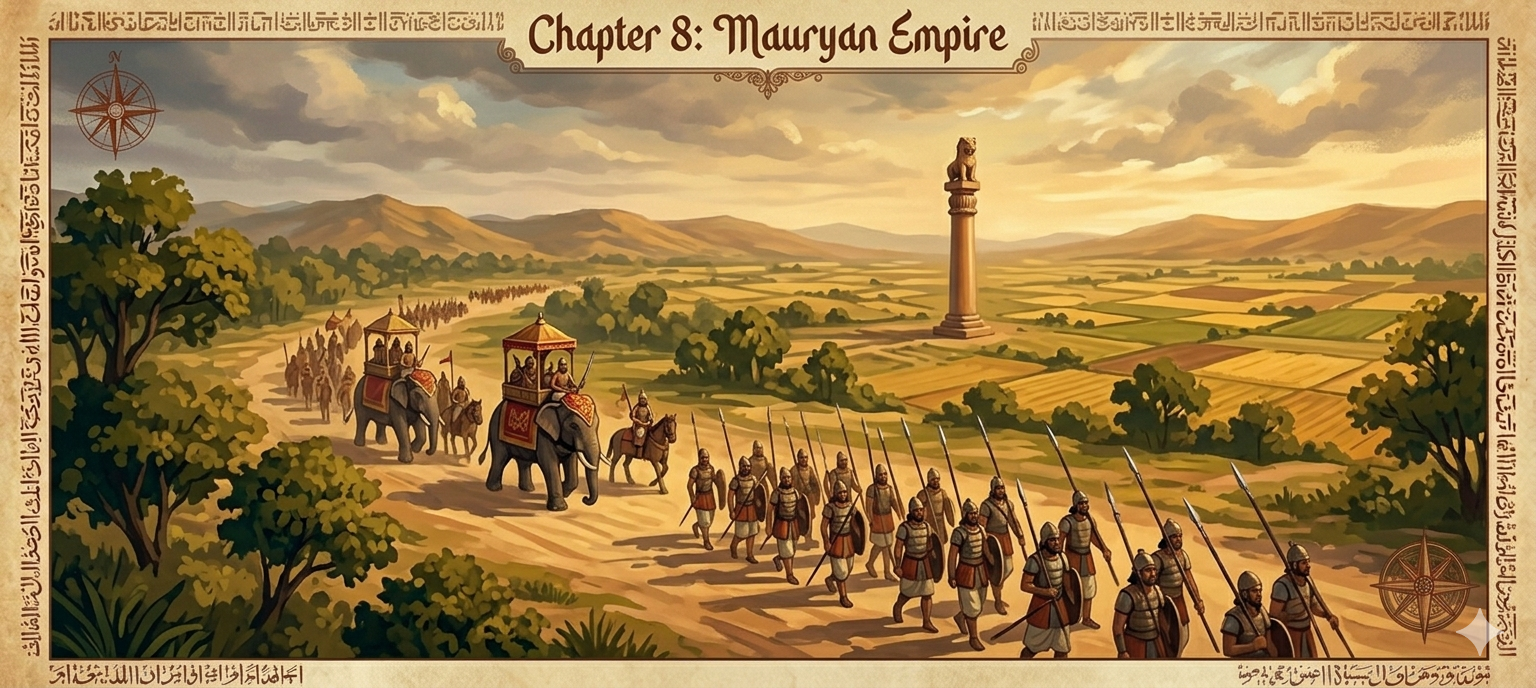
Chapter 08
Chandragupta, Ashoka's edicts, and the northwest frontier's role in the first Indian empire.
Read Chapter
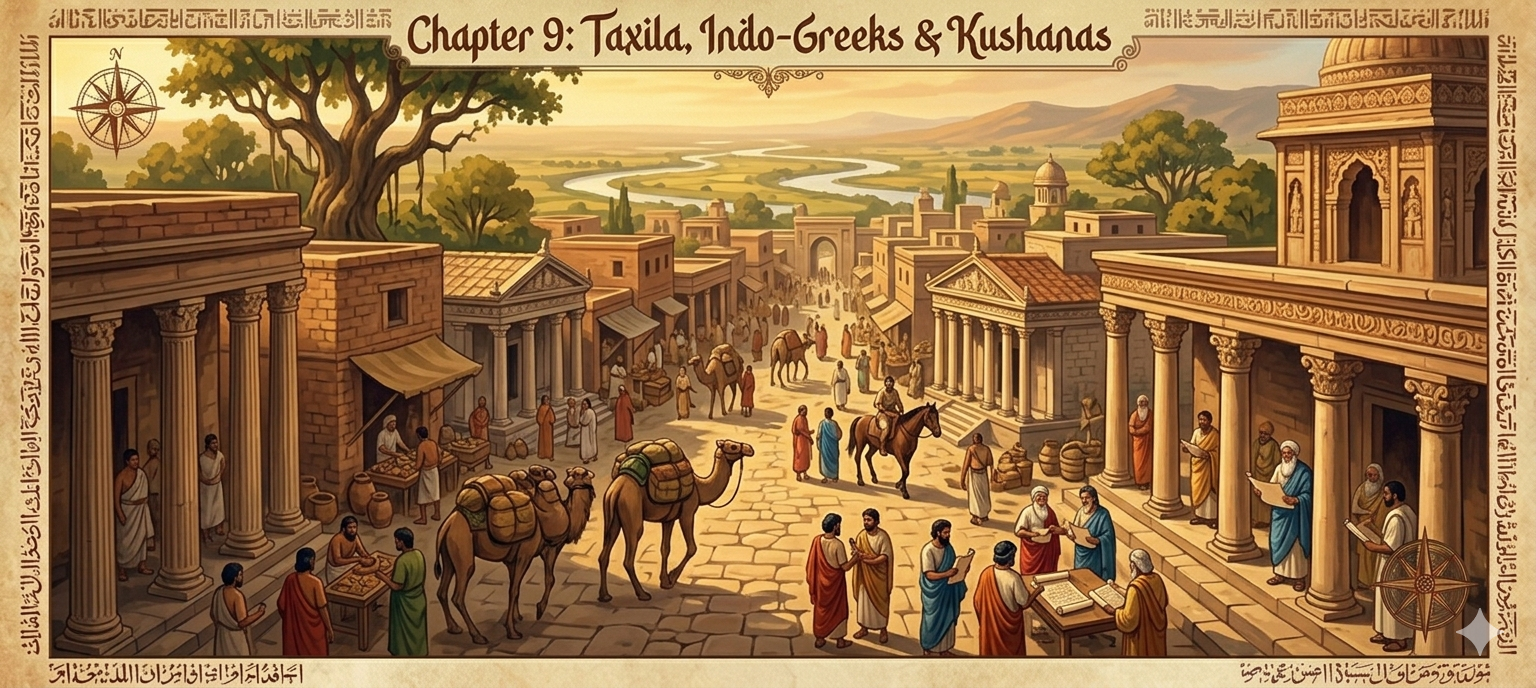
Chapter 09
Menander, Kanishka, and the ancient university city of Taxila at the crossroads of empires.
Read Chapter
Chapter 10
Punjab's golden age of arts, science, and regional polity during the Gupta empire.
Read Chapter
Chapter 11
Ghaznavid raids, the Slave Dynasty, and Punjab as the strategic prize of medieval rulers.
Read Chapter
Chapter 12
Babur's invasions, the grandeur of Lahore, and Mughal architecture across Punjab.
Read Chapter
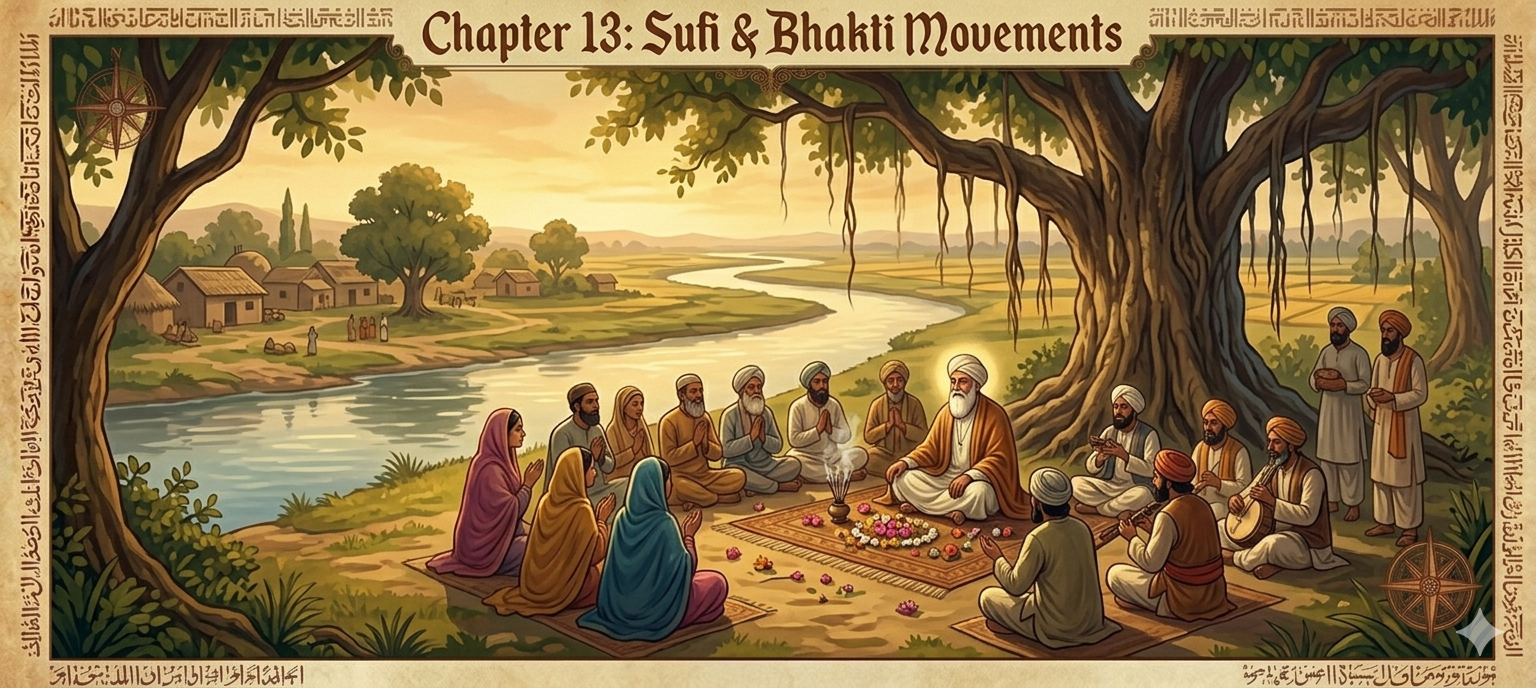
Chapter 13
Baba Farid, Shah Hussain, Bulleh Shah — rivers of spiritual devotion that flowed through Punjab.
Read Chapter
Chapter 14
Cultural integration, religious pluralism, and social conditions preceding the Sikh movement.
Read Chapter
Chapter 15
The Udāsīs, Babar Vāni, and how Guru Nanak redrew Punjab's spiritual map forever.
Read Chapter
Chapter 16
From Guru Nanak to Guru Gobind Singh — the birth of the Khalsa and forging of Sikh identity.
Read Chapter
Chapter 17
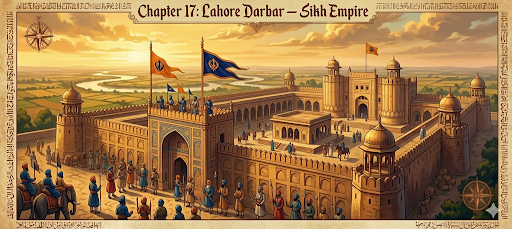
Maharaja Ranjit Singh, the Sikh Misls, the Fauj-i-Ain, the Koh-i-Noor, and Punjab's golden era.
Read Chapter
Chapter 18
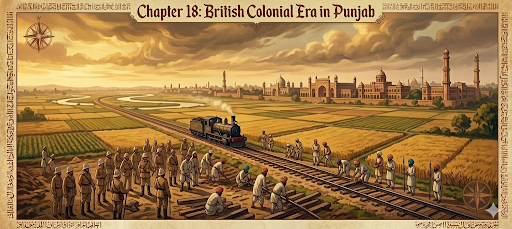
The Canal Colonies, Jallianwala Bagh 1919, the Ghadar Party, and the road to independence.
Read Chapter
Chapter 19
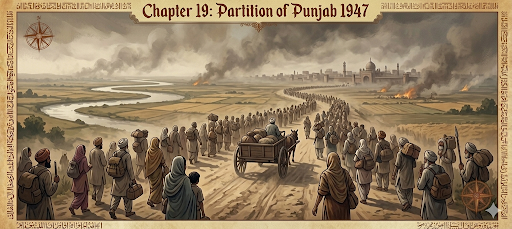
The Radcliffe Line, the great migration, and the trauma that still echoes across two nations.
Read Chapter
Chapter 20
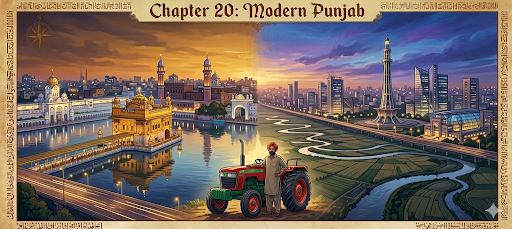
The Green Revolution, Operation Blue Star, Pakistani Punjab, and 130M Punjabis worldwide.
Read ChapterChronology
From Harappan cities to modern Punjab — a civilization that never stopped writing history.
3500 BCE
Harappan cities flourish on Punjab's plains — among the world's first urban settlements.
1500 BCE
Indo-Aryan peoples compose the Rigveda on Punjab's rivers, calling it the Land of Seven Rivers.
600–500 BCE
Taxila emerges as one of the ancient world's greatest universities. Pāṇini, the Sanskrit grammarian, is born here.
326 BCE
Alexander defeats King Porus at the Jhelum. His troops refuse to march further east at the Beas river.
322 BCE
Chandragupta Maurya unifies northwestern India. Taxila becomes the empire's intellectual centre.
1526 CE
Babur defeats Ibrahim Lodi at Panipat, crossing Punjab to found the Mughal Empire.
1469 CE
Guru Nanak is born in Talwandi, transforming Punjab's spiritual and cultural identity forever.
1699 CE
Guru Gobind Singh establishes the Khalsa Panth at Anandpur Sahib on Vaisakhi.
1799 CE
Ranjit Singh establishes the Sikh Empire with Lahore as its capital — the greatest empire Punjab ever produced.
1919 CE
General Dyer's massacre at Amritsar changed Punjab's relationship with the British Empire forever.
1947 CE
Punjab is partitioned between India and Pakistan. Despite immense tragedy, it rises as the agricultural powerhouse of both nations.
Today
Modern Punjab leads in agriculture, industry, diaspora culture, and the preservation of its 5,000-year heritage.
Living Heritage
A civilization built on song, dance, faith, and the fertile rhythm of the seasons.
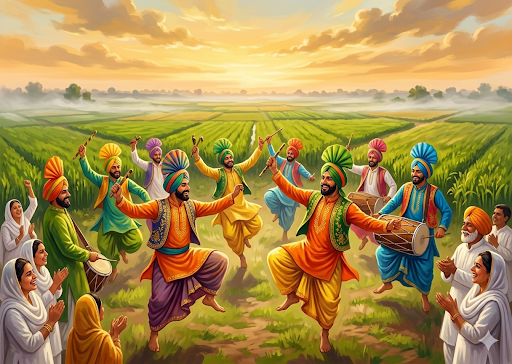
Bhangra, Giddha, and folk music traditions that pulse through centuries of harvests, festivals, and celebration.
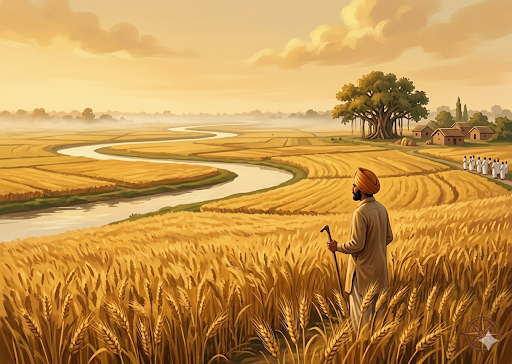
The "Granary of India" — Punjab feeds a billion people with an ancient agricultural legacy.
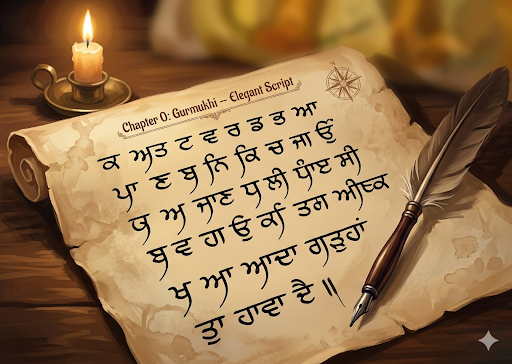
Punjabi in Gurmukhi script — the 10th most spoken language in the world, carrying centuries of poetry and gurbani.
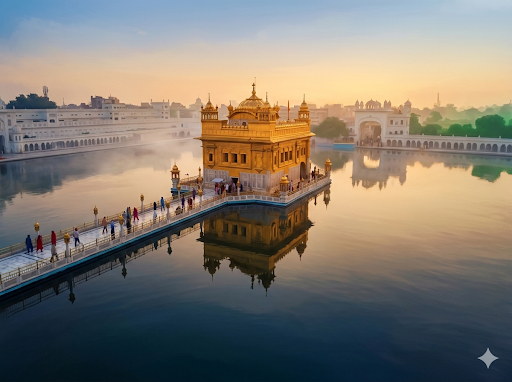
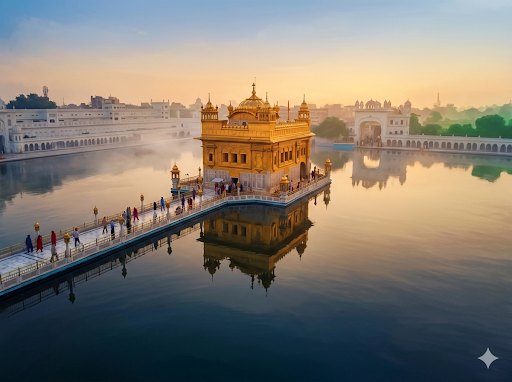
The Golden Temple, ancient mosques, Hindu temples, Sufi shrines — Punjab holds sacred sites of three world religions.
Butter chicken, sarson da saag, makki di roti — Punjabi cuisine has conquered the world.
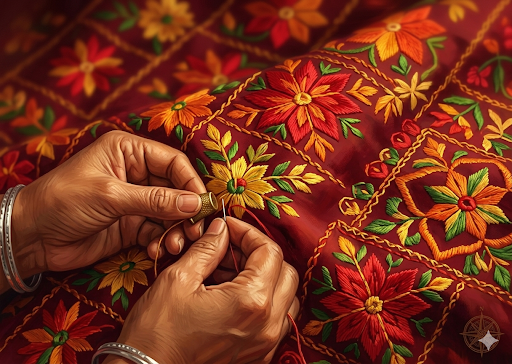
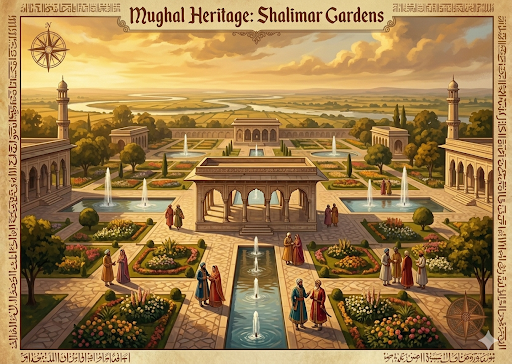
Phulkari embroidery, Mughal monuments, Sikh architecture — Punjab's artistic heritage spans millennia.
Sri Harmandir Sahib, Amritsar
Bhangra
Wheat Fields
Gurmukhi Script
Phulkari Art
Mughal Heritage
The Five RiversCommunities
Punjab's diversity is its greatest strength — a living tapestry of peoples, faiths, and traditions built over millennia.

Followers of the ten Gurus, bound by the Khalsa spirit and the Guru Granth Sahib.

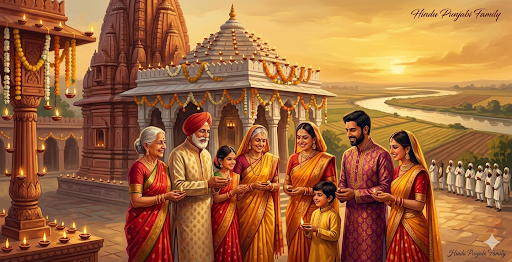
Ancient inhabitants of the Vedic-era land with a rich tradition of temple worship and classical arts.

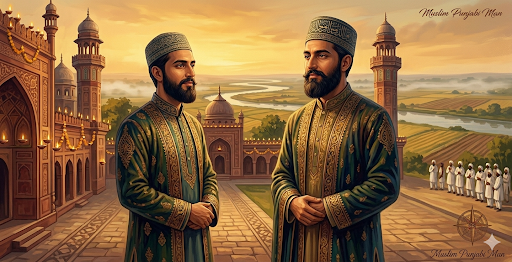
Predominantly in Pakistani Punjab, shaped by Sufi saints and centuries of Islamic culture.

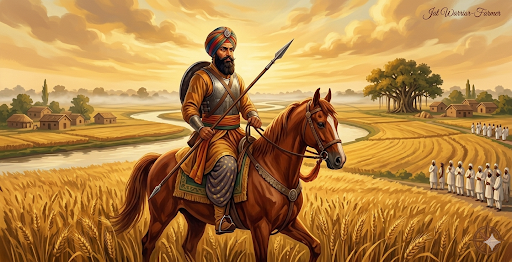
Ancient warrior-farmer communities whose lineages trace back to the earliest Indo-Aryan settlers.

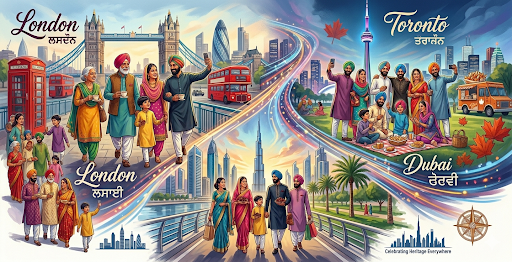
Over 130 million Punjabis worldwide — from London to Toronto to Dubai — carrying their culture across the globe.

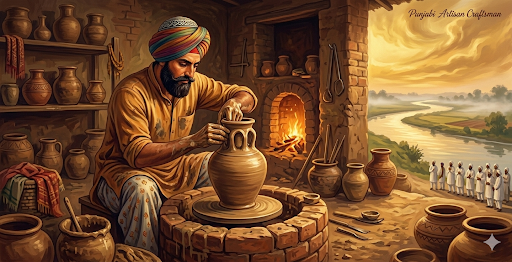
Lohar, Tarkhan, Kumhar, Julaha — skilled artisan communities whose crafts built Punjab's material culture.
ਗੁਰਬਾਣੀ · Sacred Words
Chapter 17 Spotlight
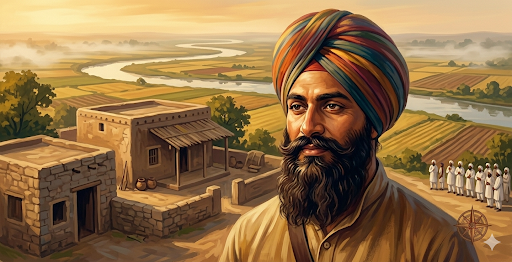
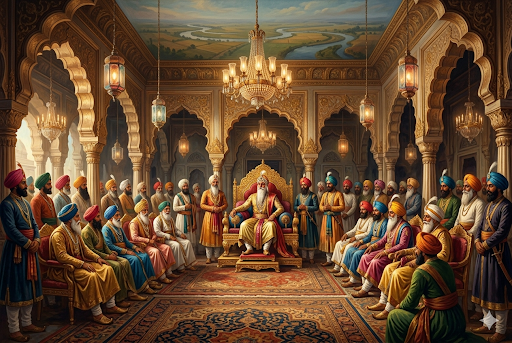
Maharaja Ranjit Singh — the Lion of Punjab — built the most formidable empire in 19th-century South Asia from Lahore. With the Koh-i-Noor on his arm, European generals in his army, and the Golden Temple gilded in gold, the Lahore Darbar was Punjab's greatest political moment.
Read Chapter 17 →Stay Connected
Get notified when new chapters, maps, and historical content are published. No spam, ever.